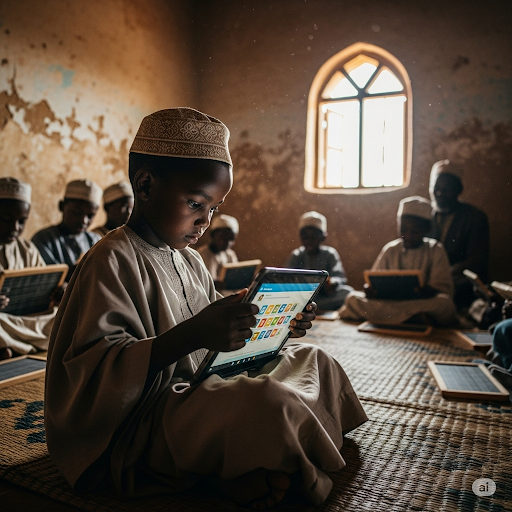
In this fast-paced digital age, everyone is talking about artificial intelligence, coding bootcamps, robotics, virtual classrooms, and smart cities. The Nigerian government is launching tech hubs, private firms are investing in innovation labs, and even rural communities are catching the tech bug. But in all this excitement, a vital question remains: who is thinking about digitising the Almajiri schools?
Let’s face it — tech is the new oil. Nigeria is chasing digital transformation with big dreams of becoming Africa’s Silicon Valley. Lagos is booming with start-ups. Abuja is not left behind. Even Kano is seeing a rise in digital literacy. But travel to the northern parts of the country and you will still find hundreds of thousands of Almajiri children sitting on bare floors, reciting verses, many without shoes, without electricity — let alone internet access.
These children are not just numbers. According to UNICEF, over 10 million Nigerian children are out of school, and a significant portion are part of the Almajiri system — an Islamic learning tradition that has existed for centuries. While there have been efforts to integrate Western education into these schools, progress has been slow, and the digital divide keeps growing.
Yes, we celebrate the growth of edtech startups like uLesson, AltSchool Africa, and the expansion of coding for kids. But do these platforms have Hausa-language support? Are they designed for offline use? Do they even know these children exist? When we talk of “inclusive development,” it must include every child — not just those in urban classrooms with tablets.
In 2012, the Goodluck Jonathan administration built some model Almajiri schools across the North. The intention was good. But years later, many of those buildings are abandoned or underused. The concept lacked follow-through. There was little effort to digitise or provide modern learning tools. Today, most Almajiri pupils still rely on oral learning alone, without the benefit of basic literacy or tech exposure.
If we’re serious about achieving the UN’s Sustainable Development Goal 4 — Quality Education for All — then Almajiri children must not be left behind.
Digitising Almajiri schools doesn’t mean turning every corner into a tech lab overnight. It means:
- Creating basic e-learning content in local languages.
- Providing solar-powered devices where there’s no electricity.
- Training Mallams (Islamic teachers) to integrate technology into their teaching.
- Partnering with edtech companies to build offline-first learning apps.
- Encouraging Northern state governments to invest in digital education infrastructure for Almajiri learners.
It’s not just a government problem. Tech companies, civil society groups, and philanthropists have a role to play. There are already blueprints. In Kenya, projects like BRCK provide internet and tablets to children in remote areas. In India, “School-in-a-Box” programmes deliver digital classrooms via solar-powered kits. Why can’t Nigeria do the same for Almajiri schools?
Digitising these schools is not just about education. It is about national security. When children are left uneducated and disconnected, they are more vulnerable to radicalisation, poverty, and exploitation. If we want to build a smarter Nigeria, we must start by connecting the disconnected.
Tech is cool. But true innovation solves deep-rooted problems. It’s time we stop clapping for shiny new tech projects in the cities while millions of children remain in the digital dark.
So we ask again — who is digitising the Almajiri schools?
Until we have a clear answer, all our talk of digital transformation is incomplete
About The Author